
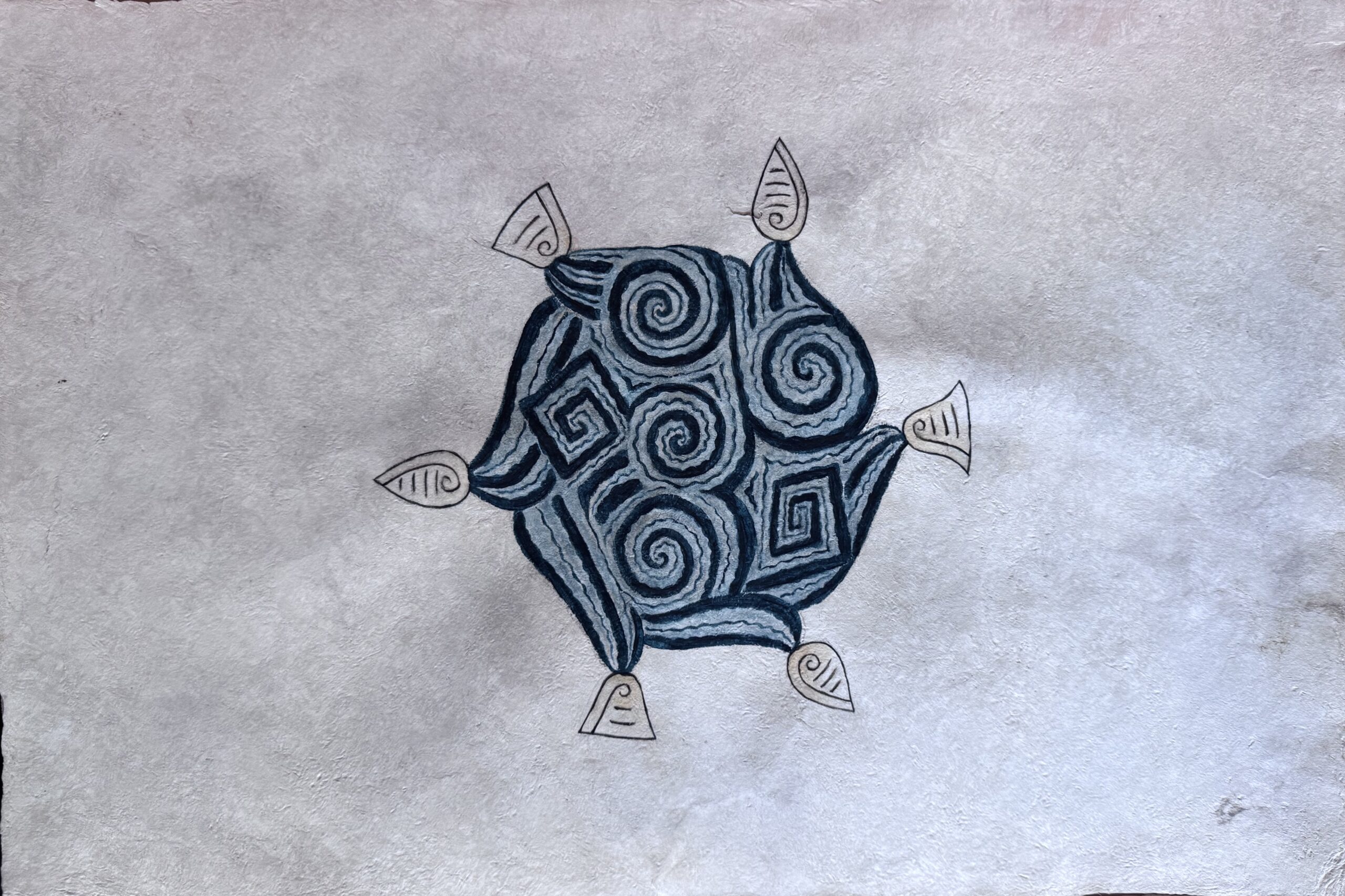
Tecuitlatl , 2025.
Tecuitlatl is a study of the bacterium Arthrospira platensis as
Pigment | nourishment
Ancestral | contemporary
Bacterial morphology | cultural meaning
Tracing the spiral: from representations of water to the helical form of the bacterium.
Tecuitlatl, “excrement of the stone,” was the name the ancient Mexica gave to the cyanobacterium harvested from Lake Texcoco. They used it in two ways: as a pigment for painting codices and as a food source, rich in proteins, vitamins, and minerals. Today, this organism is commonly known as spirulina.
The species Arthrospira platensis grows in a spiral form. In this work, the spiral connects with the fractal patterns the Mexica used to represent the movement of water in their codices. The very organism that coloured images of jade circles and precious water was also consumed in ceremonies alongside amaranth, as part of a sacred food system in which nutrition and ritual were inseparable.
Some studies suggest that its deep blue-green colour and aquatic origin linked tecuitlatl to Chalchiuhtlicue, goddess of water, and to the cycles of fertility she governed.
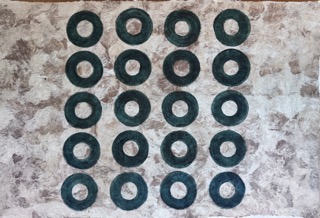
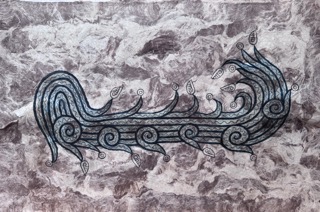

Tecuitlatl
2025
Arthrospira platensis and coal inks on amate paper
Drawing support: Jan Hein van Dierendonck
Curated by the most generous Marta de Menezes for the Cuenca Biennial.