
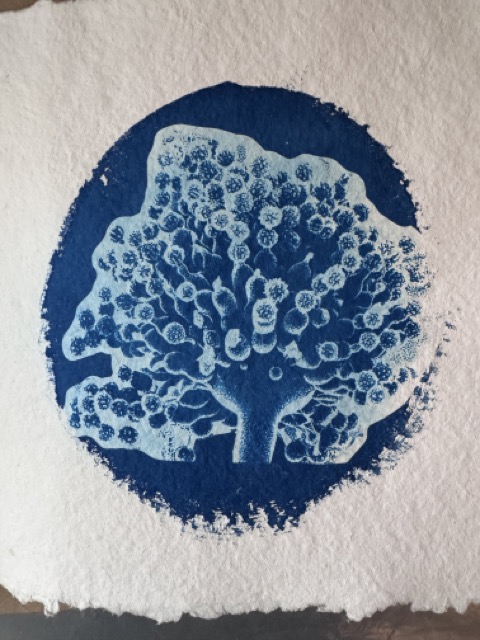
Detail of the Book of Etl
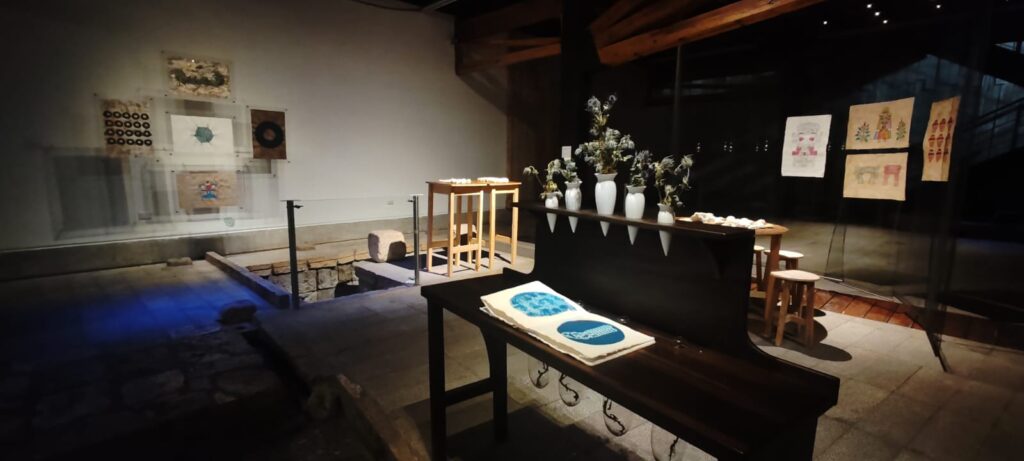
Etl is the Nahuatl word for bean. El Libro de Etl takes the form of a book about beans, and about the microbial labour that makes them nourishing, rendered in cyanotype, a photographic process that draws its image directly from sunlight, and bound as a concertina, the accordion fold used across Mesoamerican codices to hold a single continuous narrative.
Its subject is one biochemical relationship: how the koji fungus, Aspergillus oryzae, produces the enzyme α-galactosidase, and how that enzyme breaks down the oligosaccharides common across legumes that the human body cannot digest unaided, passing them instead to the bacteria of the gut, with familiar consequences. Aspergillus resolves this quietly, at the molecular scale, converting an indigestible food into an available one. The book frames this as a form of interspecies collaboration: a fungus, a legume, and a human body, brought into alignment through fermentation.
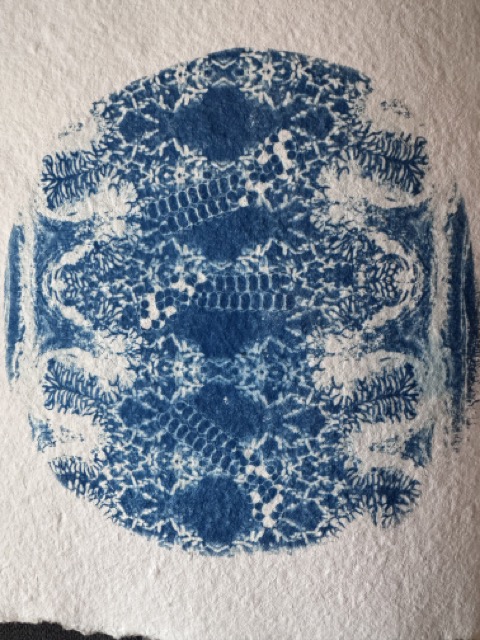
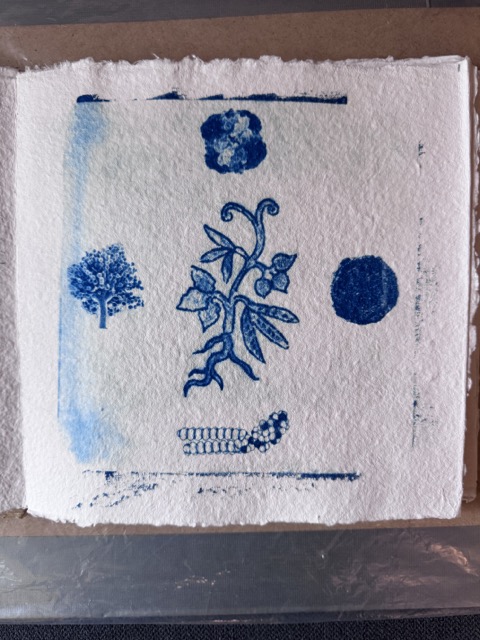
The book is built as a mirror. Seventeen plates fold symmetrically around a single central page, opening and closing on the same enzyme, as though the molecule itself were the key to the whole account. The bean appears twice, once through a prehispanic codex, once through an early Western botanical illustration, the same plant held by two different ways of knowing it. At the centre, the four protagonists of the story converge: bacteria, fungus, indigestible carbohydrates, and the golden enzyme, organised around the bean as plant, as seed, and as food.
Drawing on the codex as a Mesoamerican form of knowledge keeping, El Libro de Etl situates a contemporary question of digestion and food transition within a much older account of how humans have always eaten with, and through, other organisms.

Credits:
This work was produced during a residency at Cultivamos Cultura.