

The Rest Gallery, Ithaca, New York, April — May 2023. Curated by Rodrigo Guzmán Serrano and Camaron Cohen. Supported by the Cornell Council for the Arts.
The Death of a Naturalist takes its title from the poem by Irish poet Seamus Heaney, a coming-of-age work describing a child’s wondrous encounters with the natural world. The title names something that happens to most of us: the slow loss of childhood fascination with nature as we grow into adulthood, the moment when frogs become repulsive rather than marvellous.
Through sculpture, living organisms, and installation, Pebo examines trans-species relationships, relationships between organisms so intimate that they give rise to a third, new entity that would not exist without them, and how these challenge traditional notions of classification, ordering, and individuality. The works propose a post-anthropocentric view of organisms and their interactions, one in which bacteria, fungi, and algae are protagonists in their own right, engaged in relationships of extraordinary complexity and intimacy.
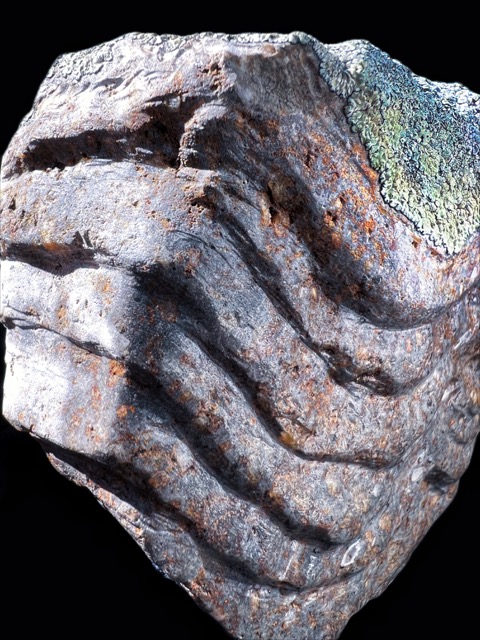
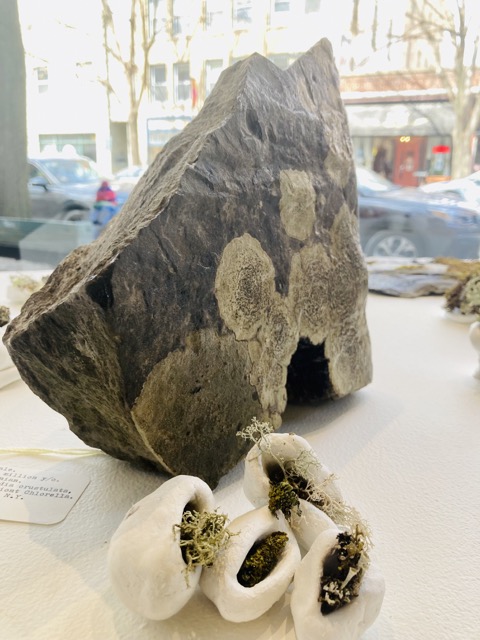
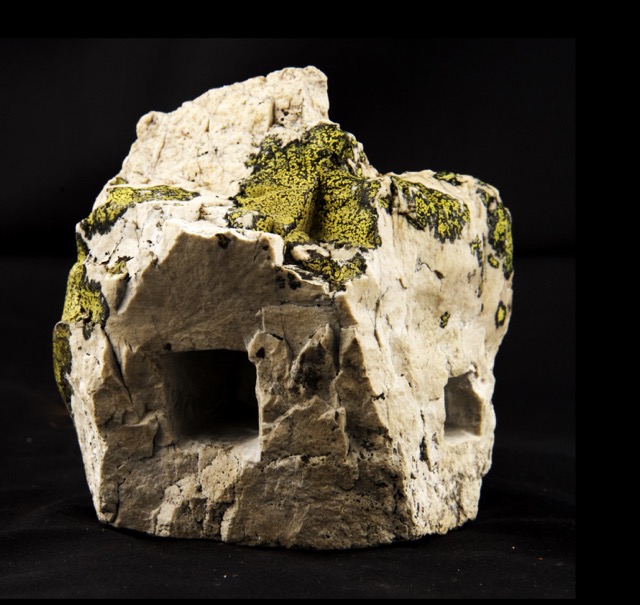
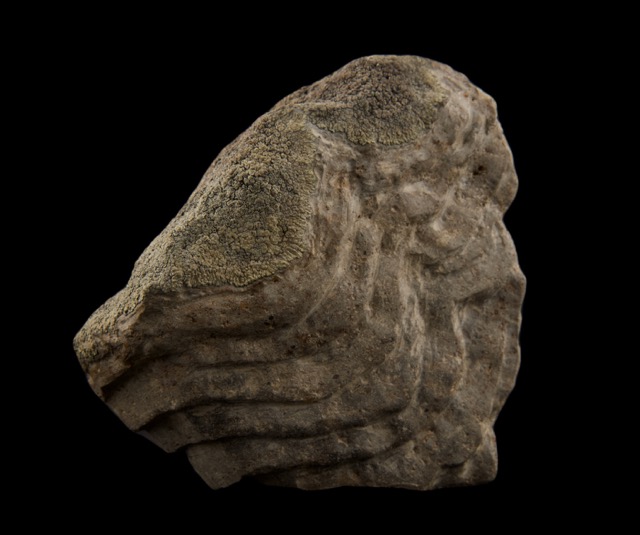
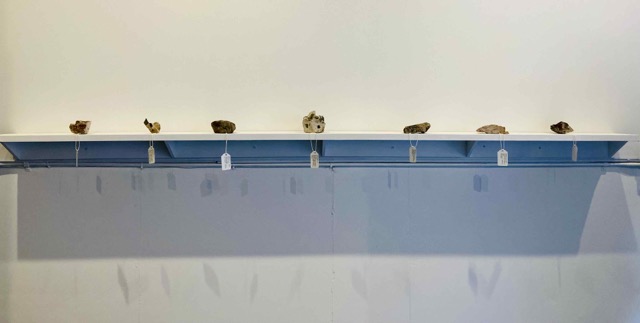
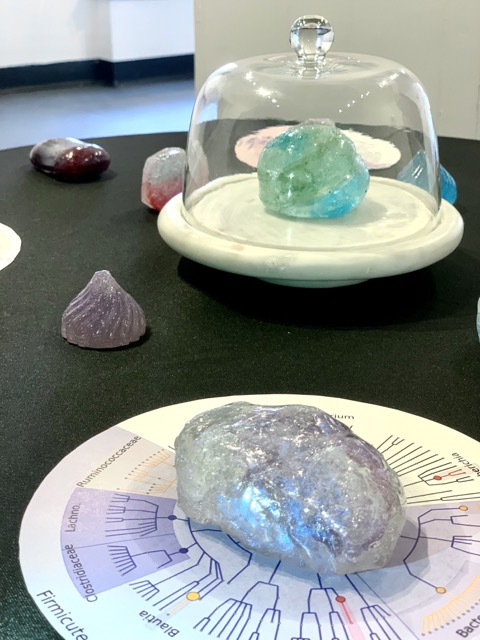
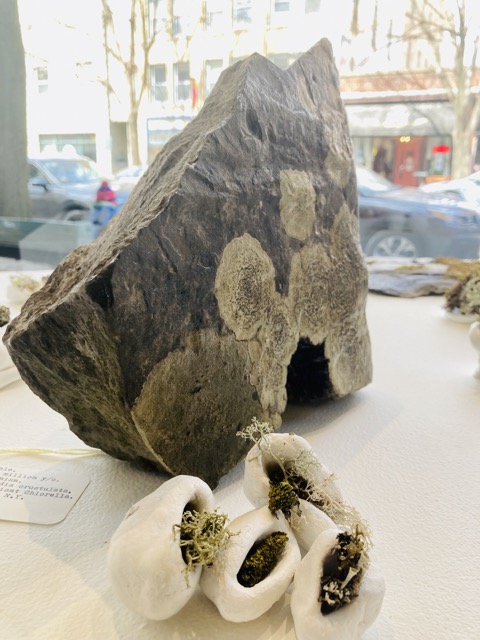
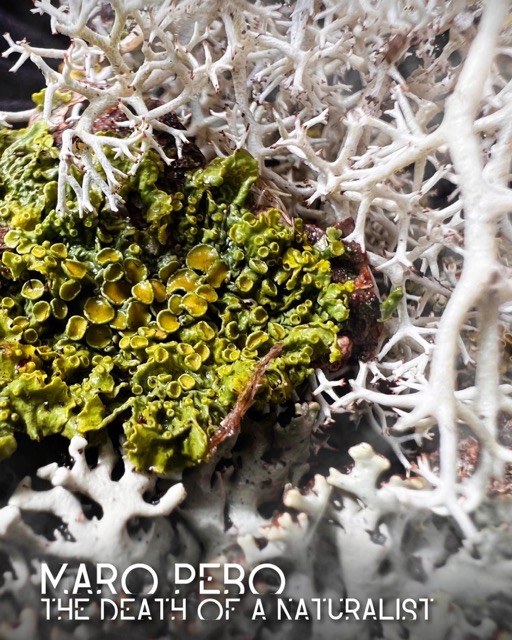
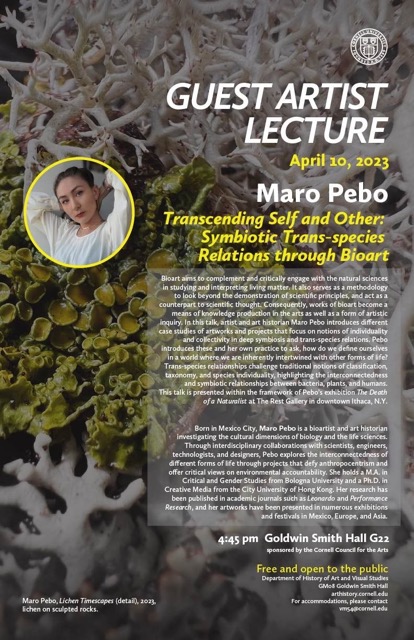
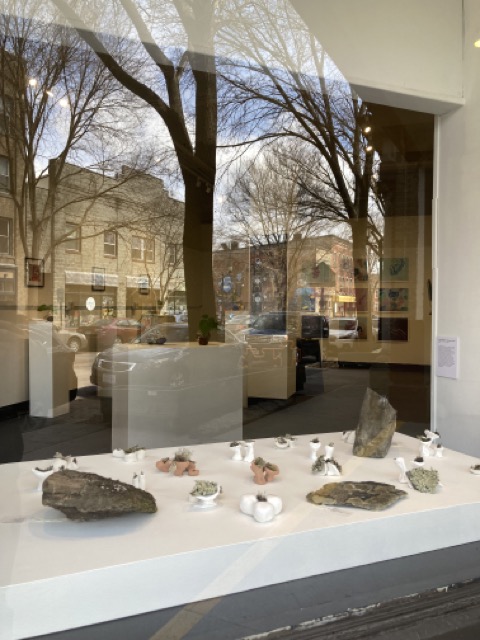
Lichen Timescapes Collection of lichen on sculpted rocks, 2023
Lichen Timescapes is a collection of living sculptures gathered across Mexico, Italy, Ireland, and Portugal. The rocks are inhabited by lichens, complex organisms comprising at least three distinct kingdoms: bacteria, fungi, and algae. Living in symbiosis, these species protect and feed one another, inscribing themselves onto stone at a rate of two millimetres per year, their growth inseparable from rock that is itself millions of years old.
These trans-species relationships are crustose: incrusted into and inseparable from their geological substrate. The rocks have also been sculpted to emphasise the lichenous forms and geological specificities of the mineral. In placing human time alongside biological and geological scales, the work asks us to reconsider where we belong within a temporality far older than our own.
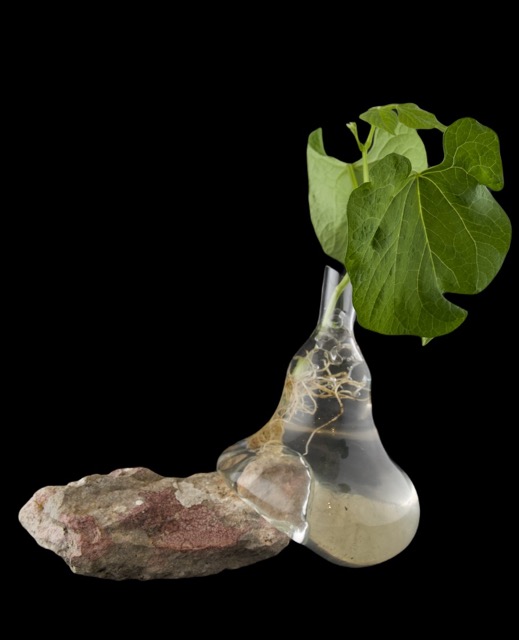
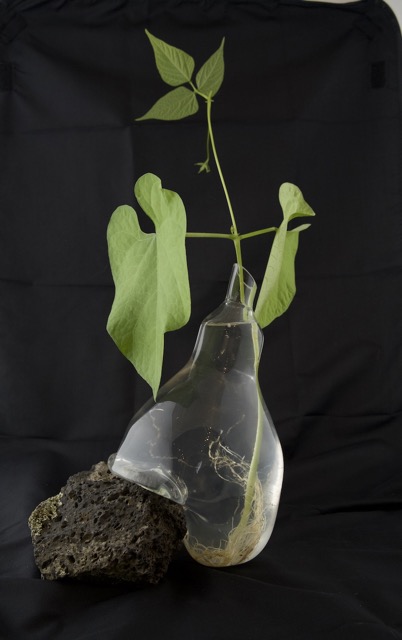
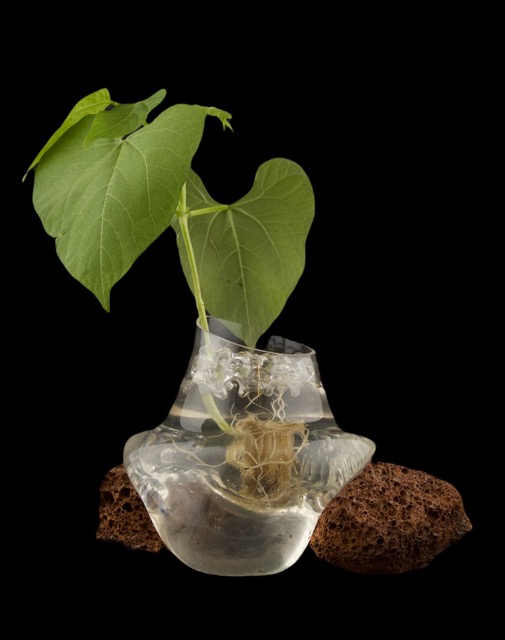
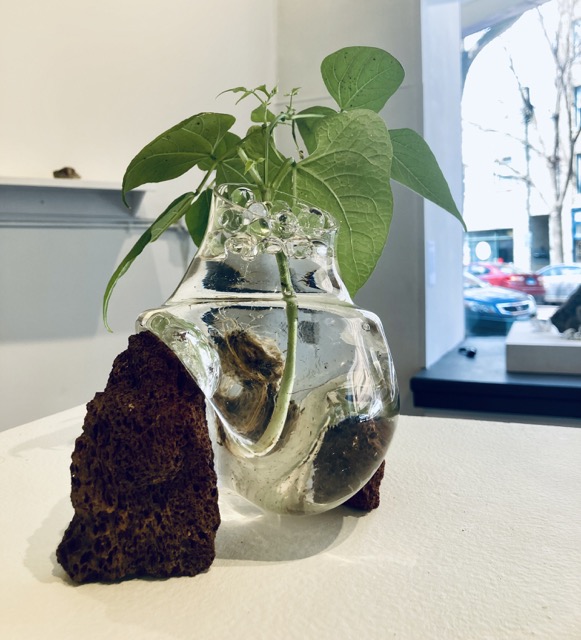
Ancient Relationships In collaboration with Carolina Páez Legume plants, symbiont microbes, glass, and lichenous rocks, 2023
Ancient Relationships, made in collaboration with Carolina Páez, explores the symbiotic relationships between humans, legumes, and bacteria, focusing specifically on Rhizobacteria and its relationship with plant roots. Presented as an ikebana arrangement, the work places the plant’s roots as protagonists, making visible the often hidden but crucial role of symbiosis in supporting nitrogen fixation and the health of plants in soil.
The plants are ancient varieties cultivated by Mesoamerican cultures, a reference to the resistance to monocultures and corporate seed control. Images behind the plants show the bacteria and fungi that enter root cells, allowing them to perform new functions. The glass forms shaped by the rocks symbolise the ancient relationships that have shaped plants over time.
By shifting focus from the visible relationship between plants and humans to the invisible relationship between bacteria and roots, the work asks us to reconsider our interconnectedness with the microbial world.
Rebiosis Ritual Edible sculptures, wax sculptures, and data visualisation installation, 2023
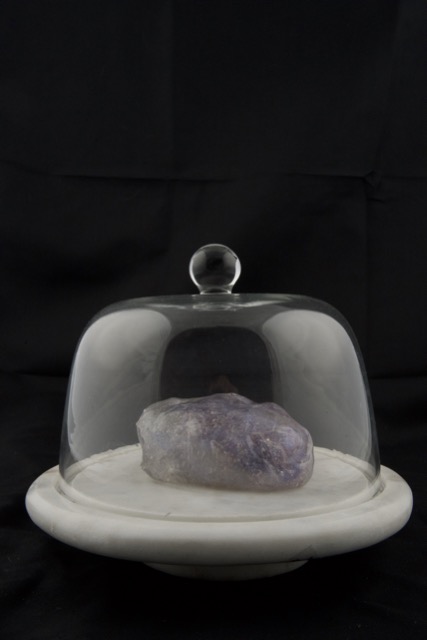
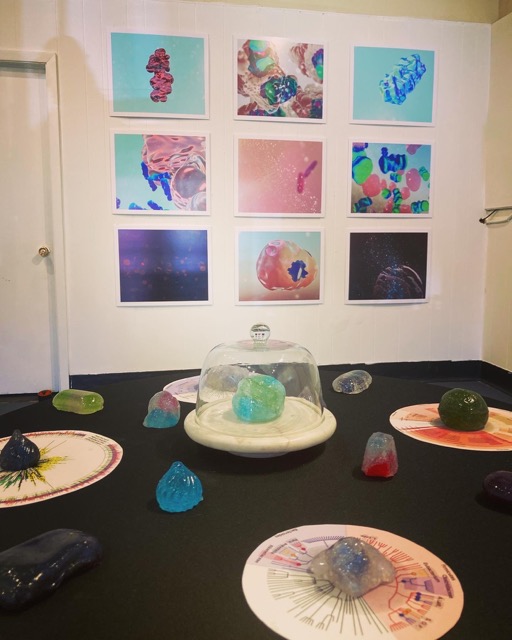
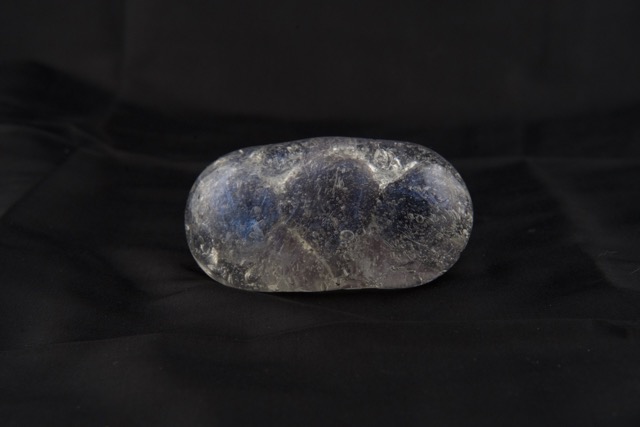
Rebiosis Ritual proposes ingestion as the most intimate form of interspecies communication. What if biodiversity is not being lost only in external ecosystems but also within ourselves? The work presents probiotic sculptures that embody microbial otherness, inviting participants to consider eating them as an act of communion, challenging common notions of disgust and fear.
The work continues Pebo’s research into the politics of microbial life and the hierarchical distribution of pain and death amongst species, exploring fundamental questions about multispecies relationships, presence, and representation. Drawing on an artistic tradition of bodily self-experimentation and acts of dining as communal bond, from Judy Chicago’s Dinner Party to Rirkrit Tiravanija’s food performances, Rebiosis Ritual proposes ingestion as a form of knowledge, a way of knowing the other that bypasses observation and becomes incorporation.
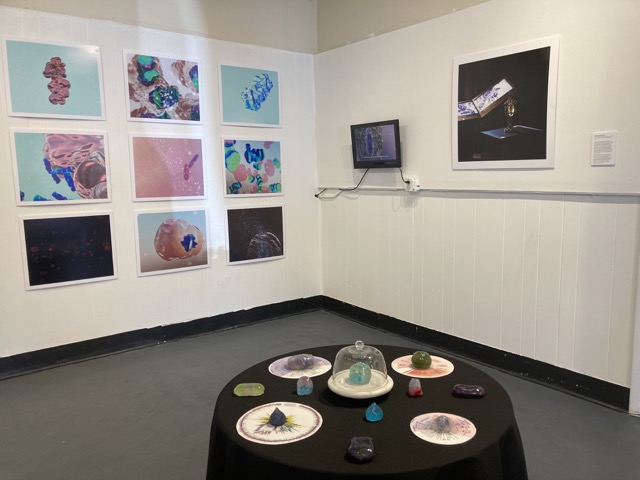
Microbial Emancipation In collaboration with Malitzin Cortes and Yun W Lam Documentation of 3D animation and installation, 2020
Microbial Emancipation, made in collaboration with Malitzin Cortes and Yun W Lam, departs from a remarkable biological fact: inside each of our cells live mitochondria, organelles that were once free-living bacteria. Engulfed by larger archaea billions of years ago, they lost their independence and became part of what we now call the eukaryotic cell. They still carry their own genome, a trace of what they once were.
The work asks what it would mean for this ancient bacterium to be free again, and arrives at a more unsettling answer: that separation is no longer possible. The trans-species relationship is not a temporary condition but the very structure that allows life to continue. We are intimately relative to bacteria.
Funded by a PAPIAM grant. Previously shown at COMCIENCIA 2020, Gerdau Museum, Belo Horizonte, Brazil.
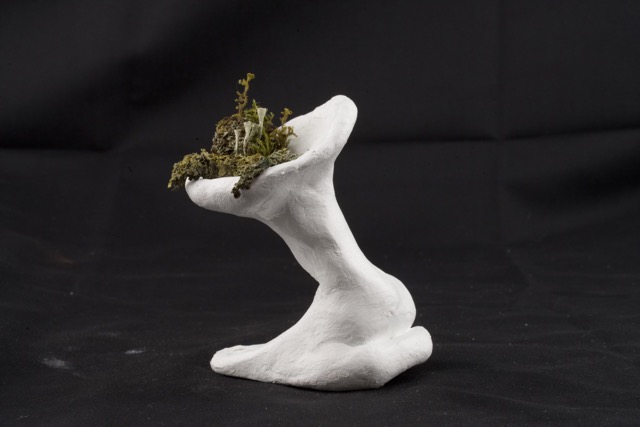
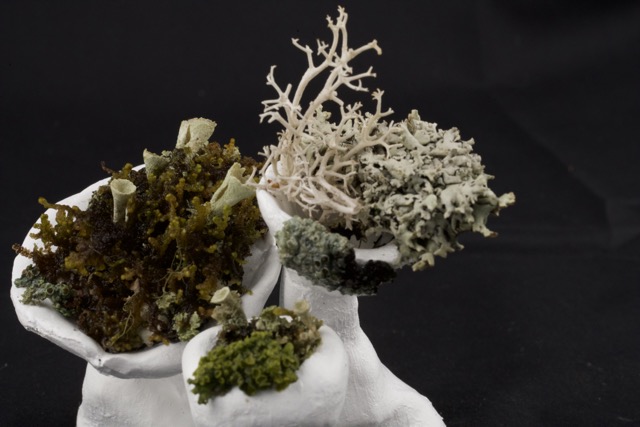
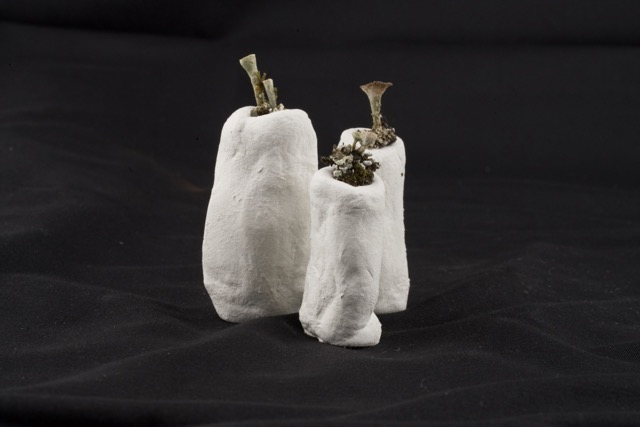
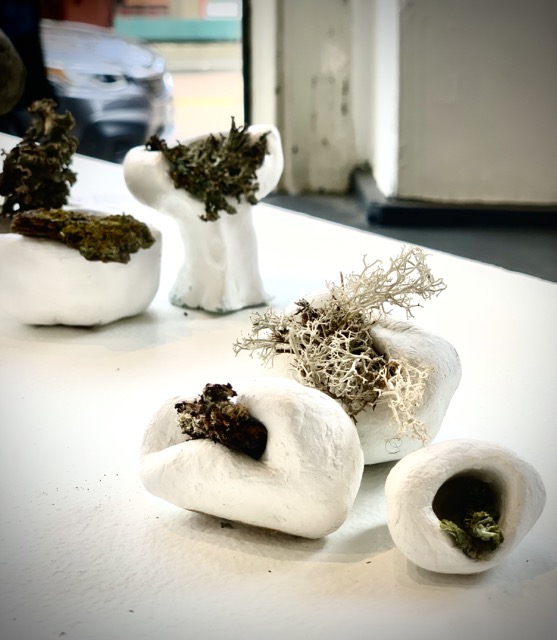
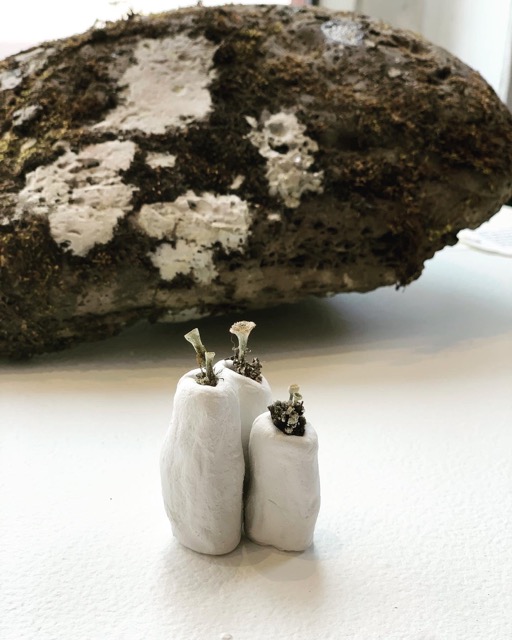
Votive Offerings for Trans-species Worship Lichen bouquets on clay bases, 2023
Votive Offerings for Trans-species Worship is a collection of small clay recipients that frame and hold lichen gathered from the local Ithaca ecosystem. They reposition it to appreciate it. They grant it the quality of something worth looking at carefully, worth being in awe of.
Votive offerings have a long history. Roman ex-votos, small clay or bronze anatomical forms left at temples and sacred springs, were acts of petition and gratitude simultaneously, an acknowledgment of dependency toward something larger or older than oneself, an act of attention that resembles devotion.
Lichens are organisms that can only exist through a deep partnership between a fungal structure, a photosynthetic partner, and other microorganisms working as a single unit. These collaborations are not peripheral to evolution but central to it. The votives are a sacred offering: acknowledgment, and also desire for those trans-species becomings.
Credits: Studio pictures by Ben Bookout